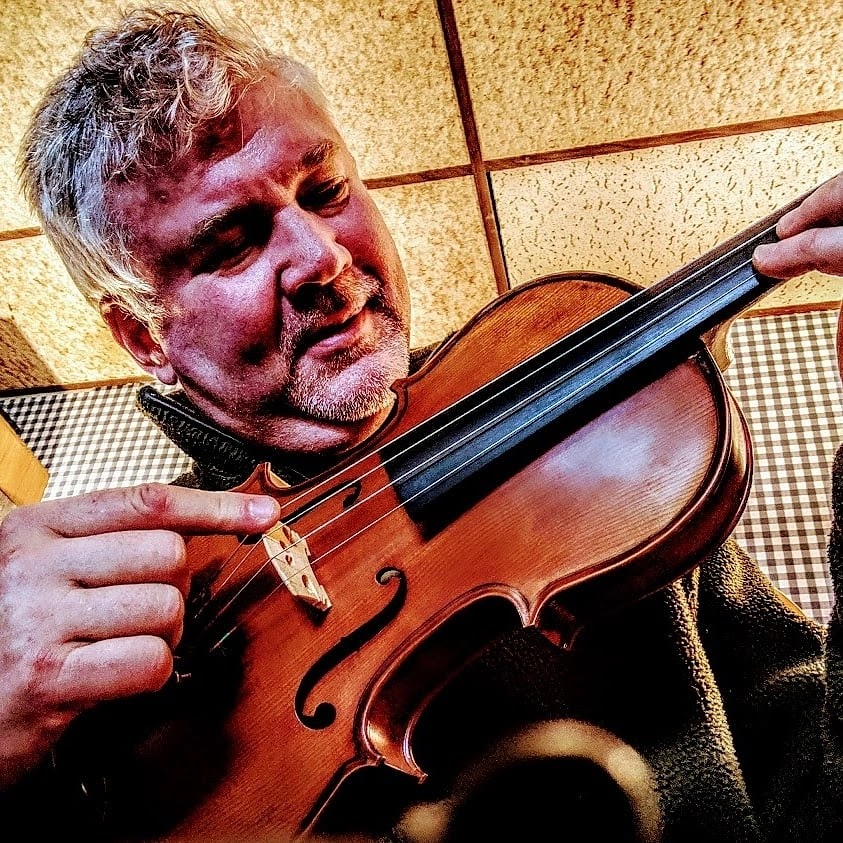
Showing posts with label fiddle. Show all posts

Wednesday, April 5, 2023

Granby Music: The Ultimate Guide for Learning to Play the Fiddle

 Published from Blogger Prime Android App

It's absolutely critical to have a teacher who is passionate about traditional music in order to learn how to play the fiddle well.


Why is it important to learn from a teacher?
If you learn from a teacher who is not passionate about traditional music you will not have the best, most thorough education in music. A teacher that is passionate about traditional music will expose you to every type of traditional music you can imagine. They will make you work hard to master every type of traditional music and in this way they will push you to be the best fiddle player you can possibly be. A teacher who is passionate about traditional music will also use a wide variety of different teaching styles and will not be afraid to go over your head a bit. A teacher who is not passionate about traditional music will not make you work hard enough to master the fiddle.

What makes a good fiddle teacher?
They must: Respect and encourage you. Respect and encourage you in the same way that they would encourage their own children. Treat you as an artist and a person. Encourage you to develop your own personal voice, a signature sound and unique style of playing. They must be skilled at explaining music in a manner that you can understand and internalize. They must also understand that a person can learn to play the fiddle for many reasons, and no one is right all of the time. Fiddle lessons must be taught in a way that reflects the different levels of musicianship that each student has, so students of different skill levels will learn differently. Finally, a good fiddle teacher does not place a high value on one particular style of playing over another.

Where do I find a good teacher?
The first place you should look for a teacher is on online websites that allow you to book lessons, such as lessons.com From there, you can usually book a lesson or two and take your pick from among the teachers listed. They may not necessarily be your teacher of choice, but if you find a teacher who sounds good to you, you're looking in the right place. In some cases, the teachers may require payment before they start teaching, but you can always try to find a free teacher first. When should I take lessons? It's a good idea to take lessons as soon as you can. Ideally, you want to be able to play a piece and have the teacher give you pointers. As soon as you've taken a few lessons, you'll be a lot closer to playing smoothly. Some people believe it's best to play less and learn more.

What are the best resources for learning how to play?
There are many fantastic books available on this topic. The Complete Fiddler's Companion by Tony Trischka is one of the most popular. There is an old tunebook called "Dagger Days" which was published in 1999. It has over one hundred tunes, including "John Henry" and "Dixie Land." And I've also heard good things about "The Lost Fiddler" by Jim Stuckey. Finding a teacher who teaches "traditional music" is essential to success. Here are a few suggestions about teachers for learning the fiddle: 1. Enthusiastic Fiddle Player - Find a close friend, classmate, or family member who plays traditional music and who has been teaching for many years. A good teacher will want to practice with you. This person may be a younger family member, a friend you have known for years, or a schoolmate.

When you've mastered the traditional music styles, you'll have a better understanding of the fiddle, what it's capable of, and its unique tone. You'll also be able to identify the differences between the styles, as well as how they sound and play so that you'll get an overall appreciation of the fiddle itself. Our Free Complete Beginner Fiddle Course is packed with a wealth of tips, tricks, and knowledge to help you play the fiddle. Click here for more information on our premier beginner fiddle course.

Why should you learn to play the fiddle? What are fiddle lessons? What is fiddle music?

There are many reasons to learn to play the fiddle. Some people are drawn to the instrument because of its beautiful, rich sound and the wide range of musical styles that can be played on it. Others are attracted to the fiddle because it is an integral part of many traditional music cultures around the world, including bluegrass, country, Irish, Scottish, and many more.

Fiddle lessons are typically private or group sessions in which a fiddle player, or fiddler, teaches students how to play the instrument. These lessons may cover topics such as proper posture, holding the bow, and playing techniques. Fiddle lessons may also include instruction on music theory, sight reading, and ear training.

Fiddle music is a broad term that refers to music played on the fiddle, a type of small, bowed string instrument. This includes a wide range of musical styles, including bluegrass, country, folk, Irish, Scottish, and many more. Fiddle music is often characterized by its fast tempos, complex melodies, and intricate bowing techniques, and it is often played as part of a group, such as a bluegrass band or a traditional Irish ensemble.

Who Was Andrea Amati, the First Violin Maker?


Andrea Amati (1505-1577)

Andrea Amati was a violin maker who lived in the 16th century (1505-1577). He is credited with being the first known maker of the violin.  Little is known about Amati's background or personal life. He was born in the town of Cremona, Italy, which was a center of lute making at the time. Amati was a member of a family of instrument makers and is believed to have learned the craft from his father.

Little is known about Amati's background, but it is believed that he was a member of a family of instrument makers who had been working in Cremona for several generations. He was probably trained in the art of instrument making by his father or grandfather.

Amati is believed to have invented the violin sometime in the early 16th century. The exact date is not known, but the oldest surviving violin made by Amati dates from around 1555.

Amati's inspiration for making the violin is not known for certain, but it is believed that he was trying to improve upon earlier bowed instruments, such as the lira and the vielle. He may have been trying to create an instrument that was louder, more agile, and more capable of playing a wider range of music than these earlier instruments.

Amati began his career as a maker of lutes, which were popular stringed instruments in the Renaissance. He is believed to have been inspired to create the violin after observing the popularity of other bowed instruments, such as the vielle, which was widely played in Europe at the time.

Amati is credited with creating the first violin in the early 16th century, though the exact date is not known. It is believed that he was inspired to create the instrument in response to the increasing popularity of bowed instruments in Italy at the time. Amati's violins were known for their exceptional craftsmanship and beautiful design, and they became highly sought after by musicians and collectors.  He is also credited with developing the modern design of the violin, which has remained largely unchanged since his time.  Amati  is considered one of the most important figures in the history of violin making.

Amati's violins were highly prized for their excellent craftsmanship and beautiful sound, and his workshop became a center of violin making in Cremona. His instruments were sought after by musicians and collectors throughout Europe, and his legacy as a violin maker continues to this day.

There are many excellent and important violin makers throughout history who have made significant contributions to the art of violin making. Some examples of highly respected violin makers include:

  • Antonio Stradivari: Stradivari was an Italian violin maker who lived in the 17th and 18th centuries. He is widely considered the greatest violin maker of all time and is credited with creating some of the finest violins ever made. His violins are known for their superior craftsmanship, tonal quality, and beautiful design.
  • Giuseppe Guarneri: Guarneri was an Italian violin maker who lived in the 17th and 18th centuries. He was a contemporary of Stradivari and is considered one of the greatest violin makers of all time. His violins are known for their strong, powerful sound and exceptional craftsmanship.
  • Antonio Guarneri: Antonio Guarneri was the son of Giuseppe Guarneri and was also an accomplished violin maker. His violins are known for their beautiful sound and exceptional craftsmanship.
  • Jacob Stainer: Stainer was an Austrian violin maker who lived in the 17th century. He is considered one of the greatest violin makers of all time and his violins are known for their exceptional tonal quality and beautiful design.

These are just a few examples of excellent and important violin makers. There are many other highly skilled and respected violin makers throughout history who have made significant contributions to the art of violin making.

Post by Adam Sweet, CEO: The Power of Music: A Personal Journey Through the World of Mandolin and Fiddle

 The transformative power of music has always been a driving force in my life. From my earliest memories, I have been captivated by the enchanting melodies and harmonies that emanate from musical instruments, particularly the mandolin and fiddle. In this blog post, I will share my personal journey through the world of mandolin and fiddle and explore how these instruments have shaped my life, both as a musician and a teacher.

My love affair with the mandolin and fiddle began when I was a teenager. I was captivated by the sounds these instruments could produce, and I knew that I wanted to learn to play them. As I grew older, my passion for music only intensified, leading me to pursue a Bachelor of Arts in music from Hampshire College. This academic journey allowed me to delve deeper into the world of music, studying various aspects such as composition, jazz theory, and ethnomusicology.

Over the years, I have had the privilege of teaching others the joy of playing the mandolin and fiddle, beginning with my first teaching position at the Fretted Instrument Workshop in Amherst. I later expanded my teaching career to include other institutions such as Downtown Sounds in Northampton, NCMC on South St, and KIMRA (now KCMC) in Keene, NH. The satisfaction of seeing my students grow and develop their skills has been an unparalleled experience.

In recent years, I have adapted to the digital landscape by offering private lessons online using apps like Google Meet and Slack. These platforms have allowed me to reach a broader audience and provide accessible and convenient music education to students from all walks of life.

The mandolin and fiddle are unique instruments, each possessing their distinct charms. The mandolin, with its bright and crisp tones, lends itself beautifully to a variety of musical genres, including classical, folk, bluegrass, and even jazz. Meanwhile, the fiddle, with its rich and soulful sound, has a versatility that allows it to shine in genres such as traditional Irish music, country, and even rock.

As a musician and teacher, I have seen firsthand how music, particularly playing the mandolin and fiddle, can positively impact people's lives. Music has the power to bring people together, transcending barriers of language and culture. It can provide solace in times of sorrow, and joy in times of celebration. It is a universal language that speaks to the heart, and I am grateful to have the opportunity to share this gift with others. 

Post by Adam Sweet, CEO: How the Fretted Instrument Workshop in Amherst, MA Set Me on the Path to Music Education


In 1985, I was given an opportunity that would change the course of my life forever. I was asked to teach mandolin and later fiddle at the Fretted Instrument Workshop, a store on the 2nd floor above Hastings in the center of Amherst, MA that catered to acoustic stringed instruments such as the guitar, mandolin, and fiddle.

At first, I was hesitant. I had never taught music before, and the thought of standing in front of a classroom of students was daunting. But something inside me urged me to take the chance, and I'm so grateful that I did.

Teaching at the Fretted Instrument Workshop was a transformative experience for me. It gave me the opportunity to share my love of music with others and to connect with a community of musicians who shared that passion. I was able to hone my teaching skills, learn new techniques, and develop my own unique style.

The store itself was a wonderful place to teach. It had a warm and inviting atmosphere that made everyone feel welcome. The staff was friendly and knowledgeable, and the students were enthusiastic and eager to learn. It was a supportive environment that gave me the confidence to offer my teaching skills to students in other communities.

The Fretted Instrument Workshop was more than just a store. It was a hub for musicians and music lovers alike. It was a place where people could come together and share their love of music, learn from each other, and grow as musicians.

Looking back, I realize that teaching at the Fretted Instrument Workshop was the starting point for my music education journey. It gave me the skills and confidence to pursue my passion for teaching and to help others discover the joy of music.

Today, as a music educator, I continue to draw on the lessons I learned at the Fretted Instrument Workshop. I strive to create a supportive and encouraging environment for my students, one that fosters creativity and self-expression. I encourage them to take risks, to try new things, and to always believe in themselves.

If you're someone who is passionate about music and interested in teaching, I urge you to take that first step. Find a community of musicians who share your passion, and immerse yourself in that world. You never know where it might lead you.

The Fretted Instrument Workshop in Amherst, MA was my starting point, but there are many other communities and resources out there that can help you on your journey. Don't be afraid to take a chance and see where it takes you.   πŸŽ΅πŸŽΈπŸŽΆ

Strategies for Effective Practice Sessions on the Mandolin and Fiddle 🎻🎢


🎢 Strategies for Effective Practice Sessions on the Mandolin and Fiddle 🎻

As a mandolin and fiddle teacher at Granby Music, I know that the key to mastering these instruments is consistent, effective practice. πŸŽ΅πŸ† In this blog post, I'll share some valuable tips and strategies that I've developed over the years to help you make the most of your practice sessions. 🎻🎢

1️⃣ Set Specific Goals and Objectives 🎯

Before starting a practice session, it's essential to have a clear idea of what you want to accomplish. πŸ“πŸ’‘ Break down your long-term goals into smaller objectives, such as learning a particular technique, mastering a new song, or improving your speed. This will help you stay focused and motivated during your practice. πŸŽΆπŸš€

2️⃣ Schedule Regular Practice Sessions πŸ“†

Consistency is critical when it comes to improving your skills on the mandolin or fiddle. πŸŽ΅πŸ”„ Set aside time for regular practice sessions, and try to stick to your schedule as closely as possible. Remember that shorter, focused sessions are often more effective than long, unfocused ones. πŸ•°️🎯

3️⃣ Warm-Up Before You Play πŸƒ‍♀️🎻

Just as athletes warm up before exercising, musicians should also warm up their fingers and hands before playing. 🎡🀲 Spend a few minutes on simple exercises like scales or arpeggios to loosen up your fingers, improve your tone, and prevent injuries. πŸŒŸπŸ‘

4️⃣ Focus on Slow, Deliberate Practice 🐒🎡

When learning a new piece or technique, it's crucial to practice slowly and deliberately. πŸŽΌπŸ” This allows you to focus on your technique and ensures that you're playing each note correctly. As you become more comfortable, gradually increase your speed while maintaining precision and control. ⏩🎢

5️⃣ Break Down Challenging Sections 🧩

If you're struggling with a particular section of a piece, break it down into smaller, more manageable segments. πŸŽ΅πŸ”§ Work on these sections individually, then gradually piece them back together. This will help you build your confidence and ensure that you're playing each part correctly. πŸ’ͺ🎢

6️⃣ Record and Analyze Your Practice Sessions πŸ“ΉπŸ”

Recording your practice sessions can be a powerful tool for improvement. πŸŽ₯🎡 Listen back to your recordings and analyze your playing, identifying areas where you can improve. This can also be a great way to track your progress over time. πŸ“ˆπŸŽ»

7️⃣ Don't Forget to Have Fun! πŸ˜ƒπŸŽΆ

While it's essential to be disciplined and focused during your practice sessions, don't forget that playing music should be enjoyable! πŸ₯³πŸŽ΅ Be sure to set aside time to play songs you love, improvise, or explore new styles. This will keep you motivated and excited about your musical journey. πŸš€πŸŒŸ

By following these strategies, you'll be well on your way to becoming a more skilled and confident mandolin or fiddle player. πŸŽ»πŸ† Remember to be patient, enjoy the process, and never stop learning. 🌟🎡

The Hilltown Family Guitar Group

  The Hilltown Family Guitar Group is a group of people interested in learning how to play the guitar.  Families encouraged!  All ages welco...